

advantages of a multi-layer flex circuit
The phrase “bend but do not break” is a common adage in the technology industry, and it is especially relevant when discussing flexible circuits. Flex PCBs are an advanced type of printed circuit board (PCB) that utilize malleable materials like polyimide and polyester to provide incredible flexibility during product design and manufacturing. They offer many advantages compared to rigid PCBs, including significant weight reduction and the ability to be formed into complex shapes without mechanical failure.
The foundation of a flex circuit is an insulating layer, which protects the copper conductive layers within. It is often made of a material such as polyimide or polyester, which provides high heat resistance and mechanical stability. This layer is bonded to the flexible base material by a strong adhesive, and the conductive copper layers are then etched to create the desired circuit paths. The traces are then covered with a coverlay, which protects the conductive layer from moisture, dirt, and mechanical damage.
Multilayer flex circuit are designed with multiple copper layers separated by dielectric layers. These layers can be plated by metalized through holes, making them ideal for more complex designs. The multilayer design also allows for additional shielding and higher component density. Rigid flex circuits, on the other hand, adhere to IPC 6013 – Type 4 standards, which use a rigid and flexible insulation material with a metallized through-hole that extends through both sides of the PCB.
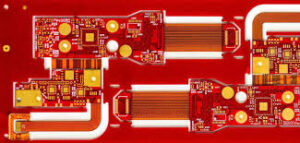
What are the advantages of a multi-layer flex circuit?
When deciding which type of flex circuit to choose for your application, you will need to consider whether it is intended for static or dynamic bending and twisting. Static flex circuits are designed for one-time bending during installation, while dynamic flex circuits are built to be continuously manipulated during operation.
Both types of flex circuits can offer significant benefits in terms of weight reduction and space savings. Flexible circuits are able to reduce overall product weight by eliminating the need for bulky connectors and wire harnesses. Their streamlined design also improves airflow in the device, increasing thermal dissipation and improving performance.
Multilayer flex circuits can also reduce assembly costs and time by eliminating the need for manual wiring and soldering. They can also minimize human error by routing to only the points necessitated by the circuit’s plan, making them more reliable than hand-built wire harnesses.
While the initial investment in multilayer flex circuits may be higher than traditional rigid PCBs, they can save valuable space and money by eliminating unnecessary components and simplifying assembly processes. They can also offer increased reliability and improved performance, especially in harsh environments. As the technology industry continues to push the boundaries of what is possible, multilayer flex circuits are poised to play an important role in future products.