
Last Updated:
This system employs high-performance cameras to read vehicle number plates and RFID FASTags to automatically deduct tolls without stopping

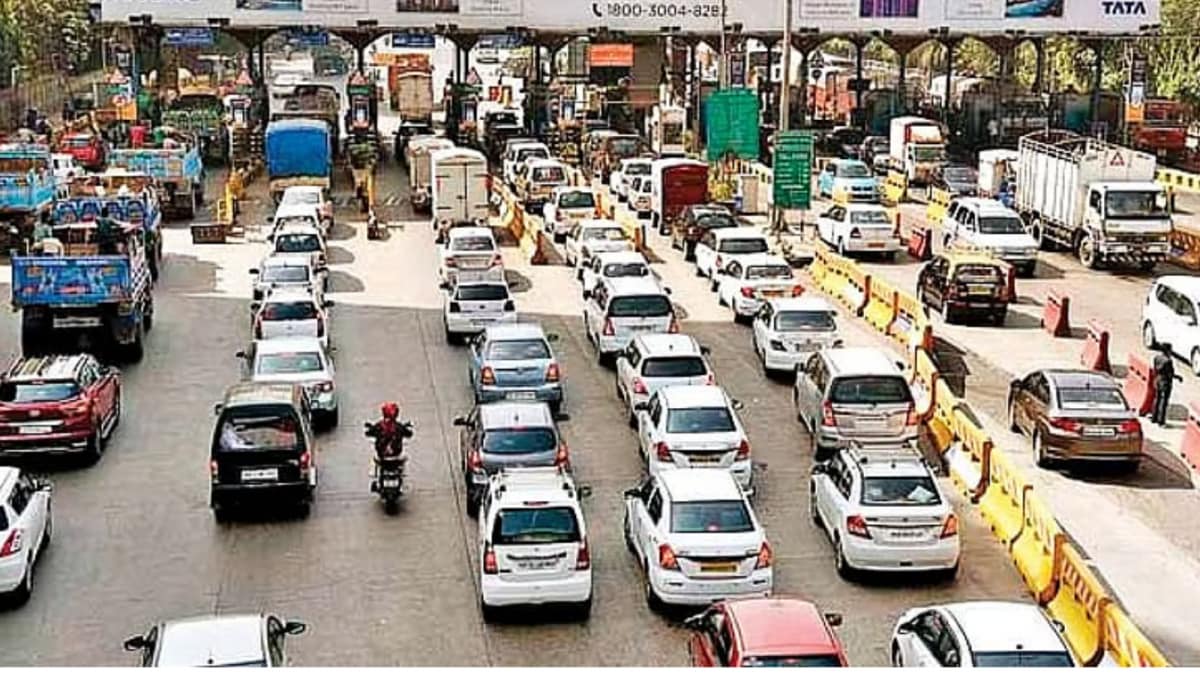
The report also mentioned that the National Highways Authority of India (NHAI) plans to nationally implement this new system using artificial intelligence (AI) to create a smart tolling process. (Representational image)
The Ministry of Road Transport and Highways (MoRTH) aims to implement a barrier-less tolling mechanism on all four-lane-plus expressways across the country within the next four years, according to the Public Accounts Committee (PAC) report presented to Parliament on Tuesday. The report, citing written responses from the ministry, confirmed that the process is underway.
Last month, News18 reported that the ministry is moving forward with corridor- or stretch-based projects for implementing the Automatic Number Plate Recognition (ANPR) FASTag System (AFS)-based Barrier-Less Free Flow tolling, instead of a satellite-based user fee collection system.
This system employs high-performance cameras to read vehicle number plates and RFID FASTags to automatically deduct tolls without stopping. The ANPR technology identifies vehicles by reading their number plates, while the existing FASTag system, which uses Radio-Frequency Identification (RFID), handles the toll deduction.
The report also mentioned that the National Highways Authority of India (NHAI) plans to nationally implement this new system using artificial intelligence (AI) to create a smart tolling process.
The ministry stated that the Request for Proposal (RFP) to implement the barrier-free tolling system at the fee plazas of Gharonda, Choryasi, Nemili, UER-II, and Dwarka Expressway has been invited. The possibility of implementing it at other fee plazas will depend on the outcomes and efficiency of these initial projects.
However, the committee noted unresolved issues with the existing FASTag-based tolling system. Despite the widespread adoption of FASTag—with over 5.54 crore active tags and daily toll collections exceeding Rs 193 crore—major operational and user-level deficiencies persist. Malfunctioning FASTag scanners at toll plazas frequently result in failed reads and vehicle pile-ups. Inconsistent ground-level enforcement and uneven RFID infrastructure functionality lead to unnecessary congestion and user dissatisfaction.
The committee recommended that tolling infrastructure, including FASTag systems, ANPR cameras, and surveillance networks, be integrated with automated incident detection systems to quickly identify crashes, obstructions, and blackspot activities.
The committee also suggested implementing an integrated emergency response system on national highways, complete with GPS-enabled ambulances, highway patrol, and recovery vehicles for immediate trauma response, all monitored through a control room.
The ministry emphasised that commuter convenience is crucial, and the free-flow tolling system allows vehicles to cross toll plazas without stopping. The ANPR camera can read the vehicle number and the FASTag from a moving vehicle, allowing for toll collection without stopping. This technology uses optical character recognition, software, and cameras to capture the vehicle type, which is linked to the VAHAN database. This linkage allows the system to charge the correct toll amount based on the vehicle type.
If a FASTag does not have sufficient funds, a violation notice will be issued to the vehicle owner, requiring toll payment within seven days. To ensure smooth and efficient toll collection, the ministry plans to impose stricter penalties for violations, including doubling the toll amount if the payment is delayed beyond seven days.
These measures aim to eliminate cash transactions at toll plazas, reduce congestion, and provide commuters with a seamless, barrier-free travel experience on India’s national highways. The new system could significantly transform India’s tolling infrastructure by 2029, reducing travel time, easing congestion, and modernising the highway experience.

Nivedita Singh is a data journalist and covers the Election Commission, Indian Railways and Ministry of Road Transport and Highways. She has nearly seven years of experience in the news media. She tweets @nived…Read More
Nivedita Singh is a data journalist and covers the Election Commission, Indian Railways and Ministry of Road Transport and Highways. She has nearly seven years of experience in the news media. She tweets @nived… Read More
view comments
Read More