

Flexible printed circuit manufacturers
Optimizing component placement is a critical aspect of flexible printed circuit (FPC) manufacturing, as it directly impacts the performance, reliability, and manufacturability of electronic devices. FPC manufacturers employ various techniques and strategies to ensure efficient and effective placement of components on flexible substrates, maximizing space utilization, minimizing signal interference, and streamlining the assembly process.
One key method for optimizing component placement in FPC manufacturing is through careful consideration of the layout and design of the flexible circuit. Engineers use computer-aided design (CAD) software to create precise layouts that strategically position components, traces, and vias to minimize signal degradation, reduce electromagnetic interference (EMI), and optimize electrical performance. By optimizing the circuit layout early in the design process, manufacturers can avoid costly redesigns and ensure compatibility with assembly equipment and processes.
Furthermore, flexible printed circuit manufacturers leverage advanced placement algorithms and simulation tools to optimize component placement for specific performance criteria and design constraints. These tools analyze factors such as signal integrity, thermal management, and mechanical stress to determine the optimal placement of components on the flexible substrate. By simulating different placement scenarios and evaluating their impact on circuit performance, manufacturers can identify the most efficient and reliable configuration before moving to production.
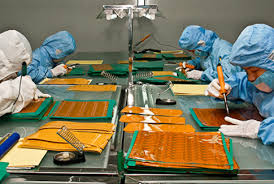
How is component placement optimized in Flexible printed circuit manufacturers?
In addition to software-based optimization, FPC manufacturers employ manual inspection and adjustment techniques to fine-tune component placement during the assembly process. Experienced technicians carefully inspect the placement of components using magnification tools and precision measurement instruments, making adjustments as needed to ensure alignment, spacing, and solder joint quality. This hands-on approach allows manufacturers to achieve optimal component placement while maintaining high levels of quality and reliability.
Moreover, FPC manufacturers utilize advanced pick-and-place equipment and automated assembly processes to streamline component placement and increase throughput. Pick-and-place machines use robotic arms equipped with vacuum nozzles to accurately place surface-mount components (SMDs) onto the flexible substrate with high speed and precision. Automated assembly lines integrate pick-and-place machines, soldering equipment, and inspection systems to efficiently process large volumes of FPCs while maintaining consistent quality and reliability.
Furthermore, FPC manufacturers optimize component placement by considering factors such as component size, orientation, and thermal characteristics. Components are arranged to minimize the risk of shadowing or blocking signals, ensure adequate clearance for routing traces, and facilitate efficient heat dissipation to prevent overheating. Additionally, manufacturers may use thermal analysis tools to predict and mitigate temperature gradients and hot spots that could affect component reliability and performance.
Another aspect of optimizing component placement in FPC manufacturing is the use of advanced packaging technologies and interconnection methods. Manufacturers leverage innovations such as chip-on-flex (COF), chip-on-board (COB), and system-in-package (SiP) to integrate multiple components into compact, space-saving configurations. These advanced packaging techniques enable higher component density, shorter signal paths, and improved electrical performance, while also reducing assembly complexity and cost.
In conclusion, optimizing component placement is essential for maximizing the performance, reliability, and manufacturability of flexible printed circuit manufacturers. By leveraging a combination of software-based design optimization, manual inspection and adjustment, advanced pick-and-place equipment, and innovative packaging technologies, manufacturers can achieve efficient and effective placement of components on flexible substrates. This results in high-quality, reliable FPCs that meet the demanding requirements of a wide range of applications, from consumer electronics to aerospace and medical devices.