

solder joints inspected for quality in printed circuit board assembly
Inspecting solder joints for quality is a critical step in Printed Circuit Board Assembly (PCBA) to ensure the reliability and functionality of electronic devices. Solder joints serve as the primary means of electrical connection between components and the circuit board, and defects in these joints can lead to performance issues, reliability problems, and even device failure. Several inspection methods are used to assess the quality of solder joints and identify any defects or anomalies that may compromise the integrity of the assembly.
One common method used to inspect solder joints is visual inspection. Visual inspection involves visually examining solder joints under magnification to identify any visible defects or irregularities. Technicians use tools such as magnifying glasses, microscopes, or automated optical inspection (AOI) systems to examine solder joints for issues such as insufficient solder, solder bridges, voids, cracks, or misalignment. Visual inspection allows for quick identification of surface-level defects and is often used as a first-line inspection method in PCBA.
Another widely used inspection method for printed circuit board assembly is X-ray inspection. X-ray inspection, also known as X-ray imaging or X-ray radiography, is a non-destructive testing technique that provides detailed internal images of solder joints and PCB assemblies. X-ray inspection is particularly useful for detecting defects such as voids, insufficient solder, tombstoning, and hidden solder joints that are not visible to the naked eye. X-ray inspection systems use high-energy X-ray beams to penetrate the PCB and capture images of the internal solder joints, allowing for precise analysis of their quality and integrity.
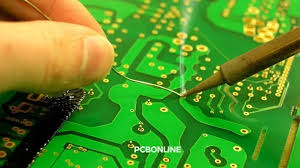
How are solder joints inspected for quality in printed circuit board assembly?
In addition to visual inspection and X-ray inspection, solder joints can also be inspected using electrical testing methods. Electrical testing, such as continuity testing and in-circuit testing, verifies the electrical connections and functionality of solder joints and components on the PCB. Continuity testing checks for open circuits or short circuits in the solder joints by applying a low-voltage signal and measuring the resistance between connection points. In-circuit testing involves applying test signals to various points on the PCB and verifying the expected responses, ensuring that all components are properly connected and functioning as intended.
Furthermore, solder joints can be inspected using destructive testing methods, such as cross-section analysis. Cross-section analysis involves cutting a sample of solder joints from the PCB, mounting it in resin, polishing the sample to a smooth surface, and examining it under a microscope. This allows for detailed analysis of the solder joint’s structure, including the integrity of the solder fillets, the presence of voids or inclusions, and the overall quality of the joint. While destructive testing is not suitable for production-level inspection, it can provide valuable insights into solder joint quality during process development or failure analysis.
Lastly, solder joints may undergo thermal cycling or environmental testing to assess their reliability under real-world operating conditions. Thermal cycling involves subjecting the PCB assembly to repeated temperature changes to simulate thermal stresses experienced during operation. Environmental testing exposes the assembly to various environmental conditions such as humidity, temperature extremes, and mechanical vibration to evaluate its performance and reliability in harsh environments. These tests help identify potential weaknesses in solder joints and assess the long-term reliability of the PCB assembly.
In conclusion, inspecting solder joints for quality is essential in Printed Circuit Board Assembly to ensure the reliability and functionality of electronic devices. By employing a combination of visual inspection, X-ray inspection, electrical testing, destructive testing, and environmental testing methods, manufacturers can identify defects in solder joints and address them before they impact the performance or reliability of the assembly. Effective solder joint inspection contributes to the production of high-quality PCB assemblies that meet the rigorous standards of today’s electronics industry.